
You are receiving the Community Edition of today’s newsletter - upgrade to a Member to receive additional perks and experiences
The Unscalable Path to Your First 10 Customers
Your first 10 customers take far more legwork than the next 100 ever will. Those first 10 are more than early revenue. They're your first real source of testing, feedback, and the trust that everyone who signs up after them will end up leaning on.
The playbook you already know
The advice most founders reach for is the same. Tap your network for people who match your ideal customer. Run cold outreach, post consistently, land some press, and show up in the communities where your customers are.
None of this is bad advice. Folks at Figma, Stripe, Airtable and Notion wouldn't be where they are if it didn't work.
The trouble is that it has become common knowledge. If you know it, so does the founder building the exact same kind of company down the street. When every founder in the room is using the same tactics, what's setting you apart?
What Paul Graham got right about recruiting by hand
Paul Graham named the way out of that room 13 years ago, in his essay "Do Things That Don't Scale." The advice has aged better than most startup wisdom from 2013.
"The most common unscalable thing founders have to do at the start is to recruit users manually."
If you build something to fix your own problem, this is easier. You're looking for people who already think the way you do.
Without that shortcut, you have to reach out to more people, watch who's interested, and go find more of that specific kind of person.
He also shares how Ben Silbermann, founder of Pinterest, followed the same route. Early Pinterest users were interested in design. So Silbermann went to a conference of design bloggers and recruited from that one room. Worked out pretty well for him, don’t you think?
Toronto founders are running the same script in their own way.
Matt Himel trades cold email blasts for donuts and job applications
Matt Himel, CEO of Harvest, an AI platform that helps Canadian small businesses collect on overdue invoices, put it plainly at our last month's Together Toronto.
He said, "I could blast out 200,000 cold emails from a handful of domains adjacent to Harvest by the end of the meetup, and so could most of the founders sitting in that room. Scale stopped being an edge the moment everyone had access to it."
Instead, he got creative. He flew out to onboard new clients in person on a Wednesday morning. He showed up at prospects' offices with donuts.
He also applied to accounts receivable job postings, to make the case that a company should hire Harvest instead of a person.
Moe Sabbaghi lets the assistant coaches sell the head coach
Mahbod Sabbaghi (Moe), co-founder of The Intelligent Search Company, which builds AI tools for sports coaches, shared the same instinct one level down the org chart.
Instead of pitching head coaches on features, he put the product into their assistant coaches hands and let them use it for free, until three of them on one team were relying on it every day without being told to. Only once that enthusiasm was visible did he go to the head coach and ask for the sale.
The real currency here is trust
None of these tactics scale. That's exactly why they work.
Each founder is building trust underneath by showing up and taking the least walked path, which is the holy grail of getting early adopters and customers. Lenny Rachitsky's research into how dozens of fast-growing B2B companies found their first ten customers backs this up. Across every tactic, trust was the winning factor.
Nobody flips a switch and watches trust spread through a market on its own. Someone has to strike the match in person, close enough to feel whether it actually catches, before it has any chance of spreading further by itself.
Ben struck the match by visiting design blogger conferences. Matt and Moe are doing it through founder-led and product-led tactics.
What's the most unscalable thing you've ever done to land a customer? Reply to this email. If it's good, we'll feature you in a future issue.
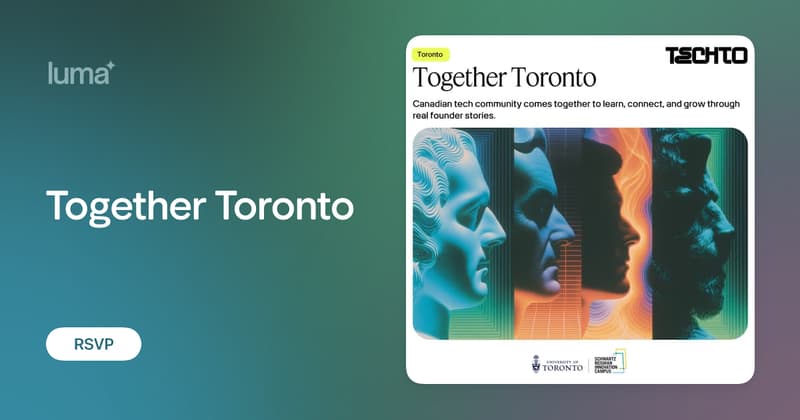
And, if you're looking to meet other founders, join us on September 14 for Together Toronto, where you can get feedback on your idea from VCs and put your product in front of 400+ tech professionals. Your next customer might just be a few seats away.

More ways to engage →
Pitch to VCs, 5-6 PM. Before doors open, a small group of founders pitch and get live feedback from investors. Separate add-on to the main event, founders and investors only. Apply here
Want a booth? We're opening a handful of spaces in the networking area for early-stage companies. If you'd rather demo than explain, request a spot. Apply here
Building in food or bev? We would love to feature you at the event. Reach out to [email protected]
To access all Together Toronto events for free and get invited to quarterly socials with founders and leaders, become a TechTO member.
📚TechTO’s reading list
👀 Who’s hiring
📌 We’re hiring a Operations Coordinator to keep TechTO and Peerscale community running smoothly. Check out the job details below. 👇🏼

Have a job you want to share? Currently looking to find your next gig? Check out the full list of jobs we curated just for you on our job board.
Powered by GuruLink
If you’ve been showing up to TechTO events for a while or loving our content, membership is the next layer. TechTO members receive complimentary access to members only digital community, monthly-hosted Together events, quarterly industry vertical events like Health, Commerce, Sales and networking socials.
Annual: $249/year | Founding: $1,199 One-time payment, lifetime access

Want to showcase your company, events, and opportunities to thousands of tech leaders, professionals, and investors across the country?
Contact us about potential partnership and advertising opportunities
